Fiction Writing:
What if the safest place you know slid into nightmare? Every building holds echoes–schools, hospitals, and gas stations all bear the ghosts of those who have passed through. In these stories, the familiar becomes uncanny, the mundane crossing the threshold into horror as reality shifts into something…else.
Step beyond these borders and find the shadows of fear made flesh, the ordinary turned eerie, the weight of a silence that watches and waits. These stories don’t just haunt—they linger in the periphery, and the liminal spaces of the mind. Enter if you dare!
Available for purchase: https://www.amazon.com/Thresholds-Charissa-Joy-Garrigus/dp/B0FWZ9ZQVX

Thesis Work:
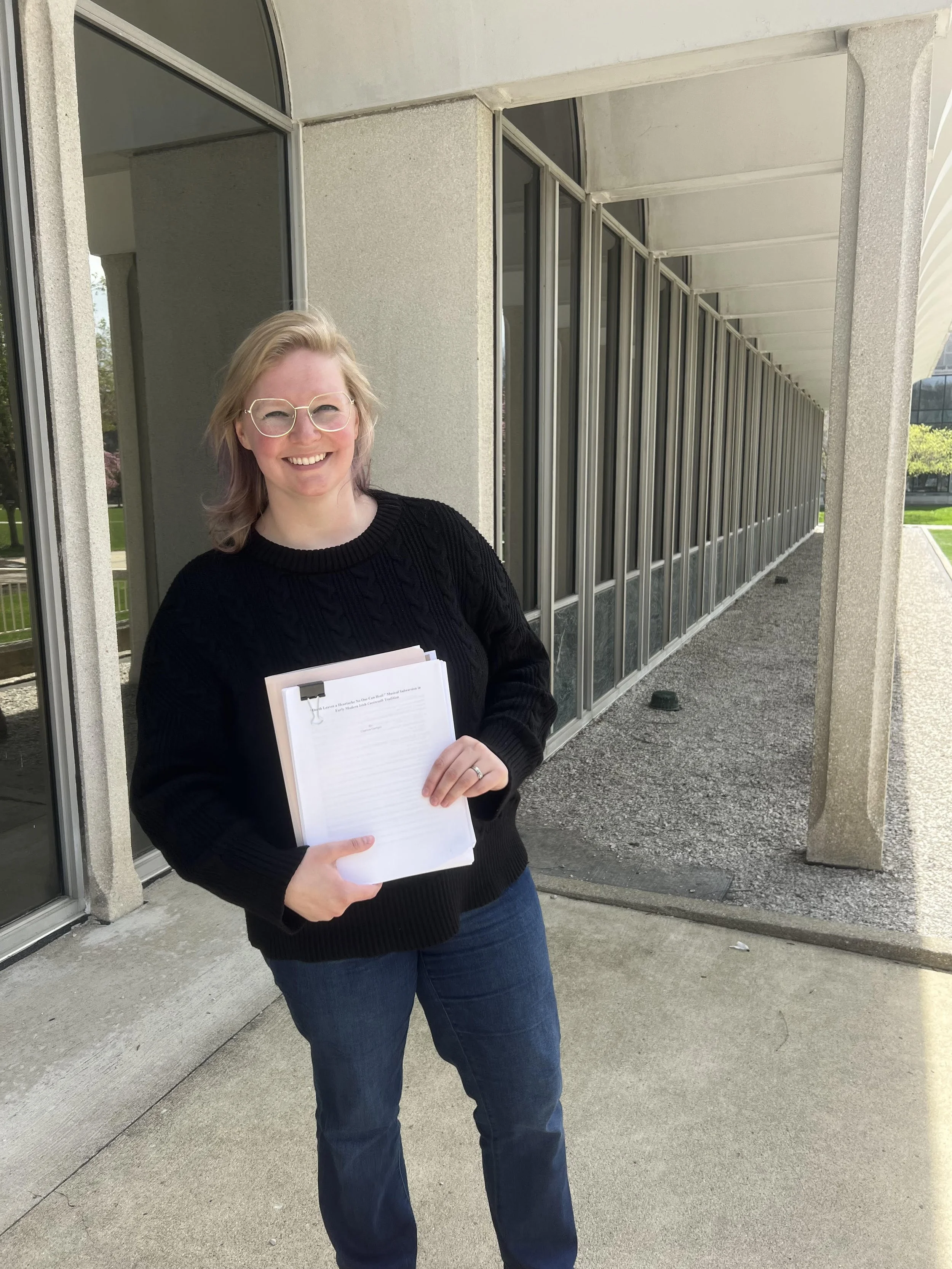
“Death Leaves a Heartache No One Can Heal”: Musical Subversion in the Irish Caoineadh Tradition.
Abstract: My thesis details the subversive, inherently feminine nature of Irish caoineadh (keening). This research focuses on how a practice with pagan, druidic roots survived in a culture that was experiencing intense religious and structural upheaval including the arrival of Protestant English settlers, tensions with the Catholic church, and longstanding pagan traditions. I contend that early modern Irish lament (caoineadh/keening) was inherently subversive due to its feminine liminality, its origins from druidic ritual, and its musical, poetic, and lyrical content that was often condemnatory of patriarchal Christian and English power structures. This thesis investigates three main topics occurring from ancient times through the early modern era and into the nineteenth century. Firstly, I examine a brief history of caoineadh. Closely tied to the act and history of keening is the interstitial feminine quality of this art form—the second topic I explore. Keeners were responsible for assisting the community to mourn and come to terms with the intense feelings and emotions associated with a death. Many keeners were also midwives, existing at the doors of life and death itself. Examining the practices of funeral wakes and pagan mythology reveals these important spaces inhabited primarily by women. The third topic I describe is the political and oftentimes accusatory nature of Irish keens. My thesis delves into the rocky relationship between keeners and the Catholic/Protestant churches. To conclude, I discuss the far reaching consequences of retaining this practice in Irish music. The commentary housed in many lament texts influenced popular Irish female protest singers such as Sinéad O’Connor and the Cranberries. The legacy of Irish keening as a female, political subversive practice lives on through the musical and denunciatory art of these creators.
North American British Music Studies Association Biennial Conference 2026: https://docs.google.com/document/d/1NvrHLFi8KsiRgWx85oHB6FRL3c15fP-pVR56k_GCCQU/edit?tab=t.0
Available at: https://digitalcommons.butler.edu/grtheses/564/ and https://www.itma.ie/news/recent-publications-acquisitions-september-2025/
Secondary Research:
“Dirge of the Three Queens: Masculine and Feminine Musical Traits in William Byrd’s Death Songs for Mary I, Elizabeth I, and Mary Stuart.”
Abstract: Byrd’s elegies written for three queens depict different notions of female death specifically in his treatment of melodic contour, text setting, and poetic content. contend that these differences signify a masculine perception of the Protestant Queen Elizabeth as compared to the more feminine musical memorials for Catholic Queens Mary Tudor and Mary Stuart. In order to signify these characteristics, my analysis consists of a close examination of the following elegies: “Crowned with Flowers and Lilies” for Mary Tudor (Byrd T 351), “In Angel’s Weed” and “The noble famous Queen” (Byrd T353 and T350 respectively) for Mary Stuart, and “I that sometime” for Elizabeth I (Byrd T 27). Secular music, particularly elegies, was becoming an essential space for public mourning and reflection on death during this time, as religious turmoil turned people away from church-based memorials. As a leading composer of elegies, Byrd’s music paired with the poetry of Edward Paston offers a glimpse into how grief was processed. Considering the research of Katherine Butler, Linda Phyllis Austern, K. Dawn Grapes, Susan McClary, Philip Taylor, and Jeremy Smith, I argue that the musical construction of Byrd’s elegies reveals contrasting shades of masculinity and femininity with regard to how these women were perceived. I believe analyzing these elegies sheds light on the implied feminine or masculine personas of politically powerful women. It also demonstrates differences between Catholic/Protestant interactions with death.
Presented at:
North American British Music Studies Association Biennial Conference 2024: https://nabmsa.org/wp-content/uploads/NABMSA24ProgramFinalRev.pdf
American Musicological Society Midwest Chapter Fall Meeting: https://amsmidwest.weebly.com/past-programs